The Underland Succession Debate
Bride of AlvarThe Underland Succession Debate is the public reckoning over the future of Underland after Alvar’s identity as a Cursed becomes known. Its decisive issue is not merely whether Alvar can survive politically, but whether a society damaged by Saul’s tyranny will define legitimate rule through inherited stigma or through demonstrated protection, reconstruction, and consent. Lucy’s appearance before the gathered leaders turns the succession question into a test of memory: the people must decide whether Alvar’s frightening nature outweighs the peace and recovery associated with his reign.
Causes and Background
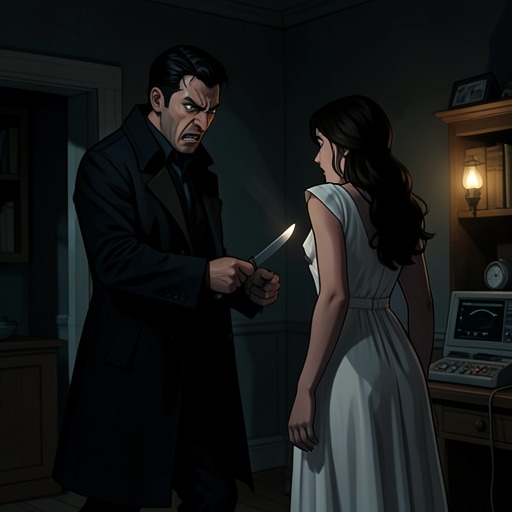
The debate grows out of a history in which authority has repeatedly been joined to coercion. Saul used the Fe collar to destroy personal freedom, and Lord Calbir recalls that his daughter returned from Saul’s harem with her soul effectively gone before taking her own life three months later. Goblia offers another image of political degeneration: Saul installed Remora as queen, preserved an extreme hive system in which one female ruled while unwanted female infants were destroyed, and kept the people enslaved in his mines under the appearance of liberation. Even the Star Wheel, the gobli execution device on which criminals are torn apart limb by limb before decapitation, represents a culture in which punishment is bodily spectacle rather than restoration.
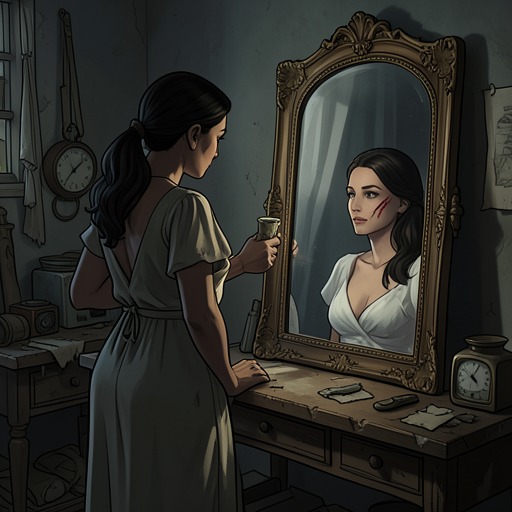
Alvar’s own history complicates any simple division between victim and ruler. He was bound to Lucy through an agreement made between Hannah Delaney and himself on October 10, 1993, and the twenty-third day of Havath, 2918. The document promised that Hannah Delaney’s unborn daughter would become Alvar’s future wife and queen in order to secure peace between Earth and Axus; it also granted Underland responsibility for the pair’s material needs, protection by the Underland Guard, and instruction at the Institute of Underland. Lucy later learns that Cursed blood was infused into her veins in the womb to save her life, making her the only person Alvar knew with certainty could carry his children without dying. Thus the succession dispute is rooted in a treaty that treated Lucy’s body as a diplomatic bridge before she could consent, even as the later debate allows her to speak as a political subject in her own right.
The Public Hearing
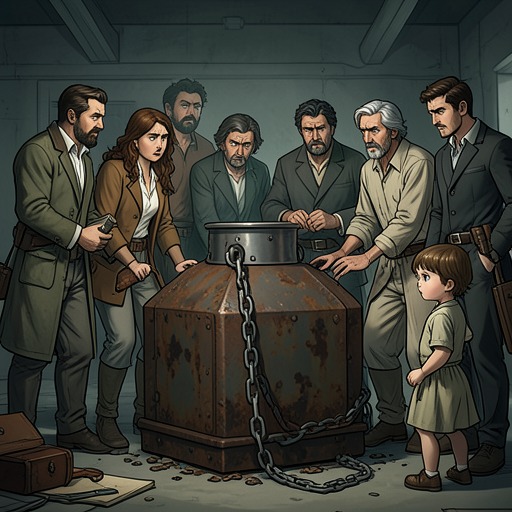
The proceedings take place among leaders gathered for a formal meal, and everyone rises when Lucy enters as a sign of respect. She follows the custom Leeza taught her, nods for the assembly to sit, and recognizes that Lord Vessin, more than Lord Calbir, needs convincing. Her uncertainty about whether she is suited to be queen is countered by Fletch’s encouragement, but her argument depends less on personal confidence than on the country’s shared experience.
Lucy asks the leaders to remember what happened after Alvar banished Saul: peace settled over the land, homes and towns were rebuilt, and people reconstructed a country stronger than the one Saul had conquered. She does not ask them to abandon their belief that the Cursed are dangerous. Instead, she separates belief from political necessity, arguing that Underland needs a protector capable of intimidating its enemies and liberating oppressed peoples across Axus. In her account, Alvar repeatedly placed the country’s interests above his own, helped defeat Remora without using his Cursed form to command obedience, restored freedom, appointed local leaders, and worked toward peace with the other peoples of the world.
Her rhetoric therefore contests the definition of monstrosity. The opposing view treats Alvar’s red eyes, flight, and supernatural abilities as proof that he is inherently corrupt and unfit to rule. Lucy answers with a record of conduct: protection, reconstruction, victory over tyranny, and the restoration of civic authority. The argument is consequential rather than purely legal or theological. It does not erase the terror associated with the Cursed; it asks whether that terror should outweigh the concrete political order Alvar has helped create.
Allegiance, Fear, and Succession
Lord Calbir provides the first decisive public endorsement. He stands, places an arm across his chest, bows to Lucy, and declares that he has always loved Alvar as his king and will continue serving him if Alvar remains on the throne. The gesture gives personal loyalty a formal political shape. Calbir is not merely defending a friend; he is affirming that the king’s history of service still carries legitimate authority.
Lord Vessin raises the central objection: if Alvar and Lucy remain rulers, their heirs might inherit the Cursed condition. His fear shifts the debate from Alvar’s present conduct to the imagined future of his children. Sola answers from the doorway, asserting that a non-Cursed heir will take the throne after Alvar and Lucy. As ruler of the Skylands and Lucy’s friend, she pledges allegiance to both of them and predicts that they will have two children, one like Lucy and one like Alvar, with his red eyes. Her prophecy does not simply reassure the assembly; it supplies a succession model that separates the continuation of the dynasty from the automatic continuation of Alvar’s condition.
Vessin’s resistance softens, though it does not disappear. He accepts Sola’s truthfulness and the possibility that the couple can produce children without ill effects, while still demanding that such a child come into the world soon. Calbir rebukes him for speaking to the queen without decorum. The exchange exposes the unequal pressures placed upon Lucy: her authority is recognized, but her political legitimacy is still measured through reproduction and the expected production of an heir.
Resolution and Political Meaning
Lord Calbir eventually asks who supports taking Alvar and Lucy as king and queen once again. The meeting ends with only a few dissenters, establishing their restoration through a public process of allegiance rather than through Alvar’s personal power alone. Vessin’s continued anxiety remains part of the settlement, especially in his proposal that a weapon be forged capable of killing a Cursed. Sola admits that such a weapon may be difficult or impossible to create but supports the desire for protection, showing that recognition of Alvar does not require the population to abandon safeguards against him.
The debate’s resolution is shaped by a contrast between command and consent. Earlier, when Alvar warned the people about Saul’s return, he gave Lord Calbir his weapon and granted permission for the army to destroy him, even offering to lead the resistance against his own body if Saul had possessed it. After Saul is finally confirmed dead, the succession debate asks what kind of order should replace emergency resistance. Lucy’s speech supplies the civic memory, Calbir supplies institutional loyalty, Sola supplies a dynastic future, and the assembly supplies public assent.
The restoration is therefore neither a clean absolution nor a simple return to the past. Alvar’s Cursed identity remains politically dangerous, and the leaders continue to fear corruption, inherited power, and the need for a weapon of last resort. Yet the debate rejects the proposition that identity alone cancels a ruler’s claim. Underland’s future is entrusted again to Alvar and Lucy because their rule is associated with liberation from Saul, the defeat of Remora, rebuilding, and protection, while succession is made imaginable through the promise of a non-Cursed heir. The event closes the immediate constitutional crisis while leaving the monarchy bound to continuing scrutiny, memory, and the unresolved problem of how power can be made safe.